

Conjugated linoleic acid, usually shortened to CLA, is a group of fatty-acid isomers found naturally in foods from ruminant animals, particularly beef and dairy products. CLA supplements provide these fatty acids in a concentrated and measured form. Most commercial formulas use oil obtained from safflower, package it in softgels and state the active CLA supplied by the complete daily serving.
CLA became popular in weight-management products because researchers observed effects on fat metabolism in laboratory and animal studies. Human trials have since examined body weight, waist circumference, fat mass, body-fat percentage and fat-free mass. The overall result is more restrained than many advertising claims: CLA can contribute a small change in some body-composition measurements, while nutrition, resistance training, daily activity and recovery still determine most of the result.
Because CLA contains no caffeine, it can be added without changing the timing of coffee or pre-workout products. Its effect is assessed over a sustained period through consistent measurements. There is no immediate burst of energy to use as a sign that the supplement is working.
CLA and Body Composition
Body weight alone cannot distinguish fat from muscle, water, glycogen, bone or the contents of the digestive system. Body composition provides a more useful view by separating fat mass from fat-free mass and adding measurements such as waist circumference. This matters during a fat-loss phase because a person can reduce body fat while retaining muscle, producing a smaller change on the scale than expected.
CLA studies therefore report several outcomes together. Fat mass and body-fat percentage describe changes in stored body fat. Fat-free mass includes muscle, water, organs and bone, so an increase in this measurement should not automatically be interpreted as new muscle growth. Waist circumference adds a practical measurement that can be repeated under the same conditions at home.
For people who lift weights, the combination of scale weight, waist measurement, progress photos and training performance gives a clearer picture than any single number. CLA can be evaluated within that wider set of results.
Results From 70 Randomized Controlled Trials
A 2024 systematic review and dose-response meta-analysis published in the British Journal of Nutrition combined 70 randomized controlled trials, 96 effect sizes and 4,159 adult participants. The researchers examined the effect of CLA supplementation on body weight, body mass index, waist circumference, fat mass, body-fat percentage and fat-free mass.
| Outcome | Pooled average change |
| Body weight | −0.35 kg |
| Body mass index | −0.15 kg/m² |
| Waist circumference | −0.62 cm |
| Fat mass | −0.44 kg |
| Body-fat percentage | −0.77 percentage points |
| Fat-free mass | +0.27 kg |
The pooled results show statistically significant changes, although the averages are small. The quality analysis is equally important. In the subgroup of higher-quality trials, the reductions in fat mass and body-fat percentage were no longer significant, while small changes in body weight, BMI and fat-free mass remained. The authors concluded that CLA may produce a modest improvement in body-composition markers, but the weight-loss effect may be too small to carry major clinical importance on its own.

The NIH Office of Dietary Supplements reaches a similar practical conclusion in its health-professional fact sheet on weight-loss supplements. Its review of human CLA studies describes the average effect as small and notes that trials differ in dose, duration, participant characteristics and CLA formulation. These differences help explain why individual studies do not all produce the same result.
Changes in Fat Mass Develop Gradually
Body-composition trials evaluate CLA over weeks or months of repeated daily intake. The supplement has no caffeine-driven alertness, and visible progress is judged from the trend across that longer period. A useful assessment therefore needs a stable stretch of eating, training and supplementation.
Day-to-day body weight moves with hydration, sodium intake, carbohydrate intake, digestion and the timing of the last meal. A weekly average reduces this noise. Waist measurements are also more reliable when they are taken at the same point of the day, in the same position and with the tape placed at the same location. Monthly photographs under similar lighting can record changes that are difficult to notice in a mirror.
This method keeps the focus on the trend. If average weight and waist measurement are gradually moving in the intended direction while strength remains stable, the complete plan is producing a useful body-composition change. A single low or high weigh-in says very little about the effect of CLA or the quality of the programme.
CLA and Fat-Free Mass
The meta-analysis reported a pooled increase of 0.27 kg in fat-free mass. That figure is worth understanding correctly. Fat-free mass is broader than skeletal muscle and includes body water, organs and bone. It cannot prove that CLA directly builds muscle.
Resistance training remains the main stimulus for retaining or gaining muscle. Protein intake supplies the amino acids required for repair, while adequate energy, sleep and recovery support training quality. During a calorie deficit, these factors help preserve lean tissue as body fat is reduced.
CLA can be added to that structure without competing with the timing of protein, creatine or amino-acid supplements. Because it has no stimulant effect, it also avoids adding to the daily caffeine total. This is useful for people who already use coffee or a caffeinated pre-workout and want a separate product for their body-composition phase.
Dose, Duration and Product Design
Published CLA trials use different daily amounts, treatment periods and combinations of isomers. Some studies include adults with overweight or obesity, while others involve healthy adults, trained participants or people with specific metabolic conditions. A pooled average combines those varied study designs; it does not predict an identical change for every user.
Well-presented product labels separate the active CLA amount from the total oil weight. A softgel can contain a stated amount of safflower oil while supplying a smaller amount of conjugated linoleic acid. Reliable comparisons use the active CLA provided by the complete daily serving, the number of softgels required and the number of daily servings in the bottle.
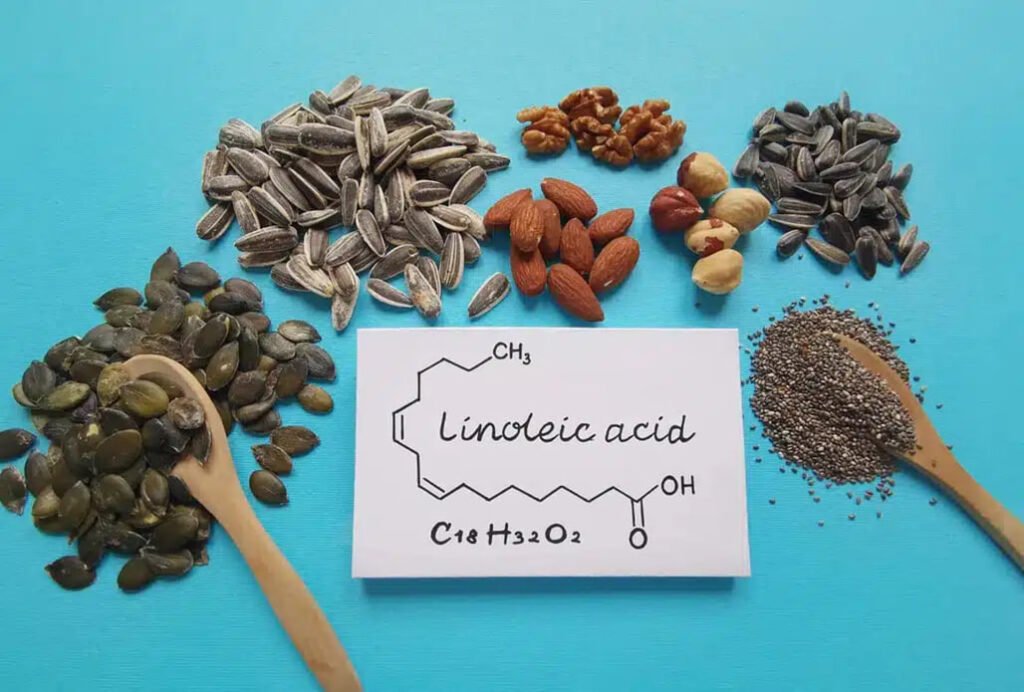
Simple products keep CLA as the main active ingredient. Complex weight-management formulas may combine it with caffeine, green tea, carnitine, chromium or botanical extracts. A simple CLA formula makes the daily amount easier to identify and can be added to a routine without duplicating stimulants already present in coffee or pre-workout products.
CLA in a Consistent Fat-Loss Plan
Fat loss develops when average energy intake remains below energy expenditure for long enough. Protein-rich meals support satiety and muscle retention. Resistance training provides the stimulus needed to maintain strength and lean tissue, while daily movement contributes to total energy expenditure. Sleep and recovery affect appetite, training performance and the ability to repeat the plan.

Within this structure, CLA serves as a small, repeatable addition to a calorie-controlled plan and regular training. Its stimulant-free format suits someone who already has a functioning routine and wants to assess an additional body-composition supplement without changing daily caffeine intake.
Keeping the main variables stable also improves the quality of the assessment. When calorie intake, protein, training frequency and the CLA serving remain consistent, changes in weekly weight and waist circumference are easier to interpret. Adding several new products at once makes the result harder to trace.
Timing CLA During the Day
CLA timing is flexible because the ingredient is caffeine-free. A consistent daily serving matters more than proximity to a workout. Softgels are commonly taken with water or another beverage according to the directions on the specific product. Choosing a regular meal or another fixed point in the day can make the serving easier to remember.
The absence of caffeine also makes CLA compatible with evening training. It can remain in the same position in the routine on training days and rest days, with no need to use it as a pre-workout product. This separates CLA from thermogenic blends designed around a noticeable stimulant effect.
Yamamoto CLA PRO Clarinol®
Yamamoto Nutrition CLA PRO uses conjugated linoleic acid obtained from natural safflower oil. According to the manufacturer’s nutritional information, the recommended daily serving is three softgels and supplies 2.4 grams of active CLA. Each bottle contains 120 softgels, which equals 40 complete daily servings when used at the stated intake.
The directions specify three softgels once a day with water or another beverage. The formula contains CLA in a gelatin-and-glycerin softgel and has no caffeine. The 2.4-gram value applies specifically to the complete daily serving of CLA PRO; other CLA products may use different concentrations and serving sizes.
Avitazen lists current availability and product information for Yamamoto CLA supplements in the UAE. The active CLA amount, serving count and stimulant-free formula make the product easy to place within an existing nutrition and training routine.
Measuring Progress Over Time
A useful tracking system can stay simple. Record body weight several mornings each week and compare weekly averages. Measure the waist at regular intervals under the same conditions. Keep a short record of major lifts or training volume, and take progress photographs once a month in similar lighting.
These measures answer different parts of the same problem. Average body weight shows the general direction of mass change. Waist circumference helps track changes around the abdomen. Training performance indicates whether the calorie deficit and recovery plan are allowing useful work in the gym. Photographs provide a visual record that is less affected by a single day’s water balance.
The evidence supports a realistic view of CLA benefits. The average changes reported across controlled trials are measurable but modest, and the strongest fat-loss work still comes from diet, training and daily activity. CLA is best placed in a long-term body-composition routine where its caffeine-free format, defined daily serving and ease of use support consistency.
Frequently Asked Questions About CLA Benefits
Does CLA Help With Fat Loss?
Human studies have reported small average reductions in body fat and body weight with CLA supplementation. It can be included in a weight-management routine built around a controlled calorie intake, regular exercise and sufficient protein. The expected contribution is modest.
Does CLA Target Belly Fat?
CLA is used for overall body-composition goals. Although some studies report a reduction in waist circumference, this measurement does not demonstrate that CLA selectively burns abdominal fat.
How Long Does CLA Take to Work?
Studies assess CLA over weeks or months of daily supplementation. Changes should be evaluated through consistent waist measurements and body-weight trends across that period. These measurements reflect the combined effects of nutrition, activity and supplementation.
Does CLA Help Build Muscle?
Research has reported a small average increase in fat-free mass, a measurement that includes muscle, water, bone and organs. This result alone cannot establish muscle growth. Resistance training and adequate protein remain central to building and maintaining muscle.
How Much Yamamoto CLA PRO Should I Take?
Yamamoto recommends three softgels daily with water or another beverage. This serving supplies 2.4 grams of conjugated linoleic acid. A bottle containing 120 softgels provides 40 daily servings at the recommended intake.
Does CLA Contain Caffeine?
CLA itself is a fatty acid and contains no caffeine. Yamamoto CLA PRO is also caffeine-free. Combination weight-management supplements can contain additional ingredients, so their caffeine content depends on the complete formula.