
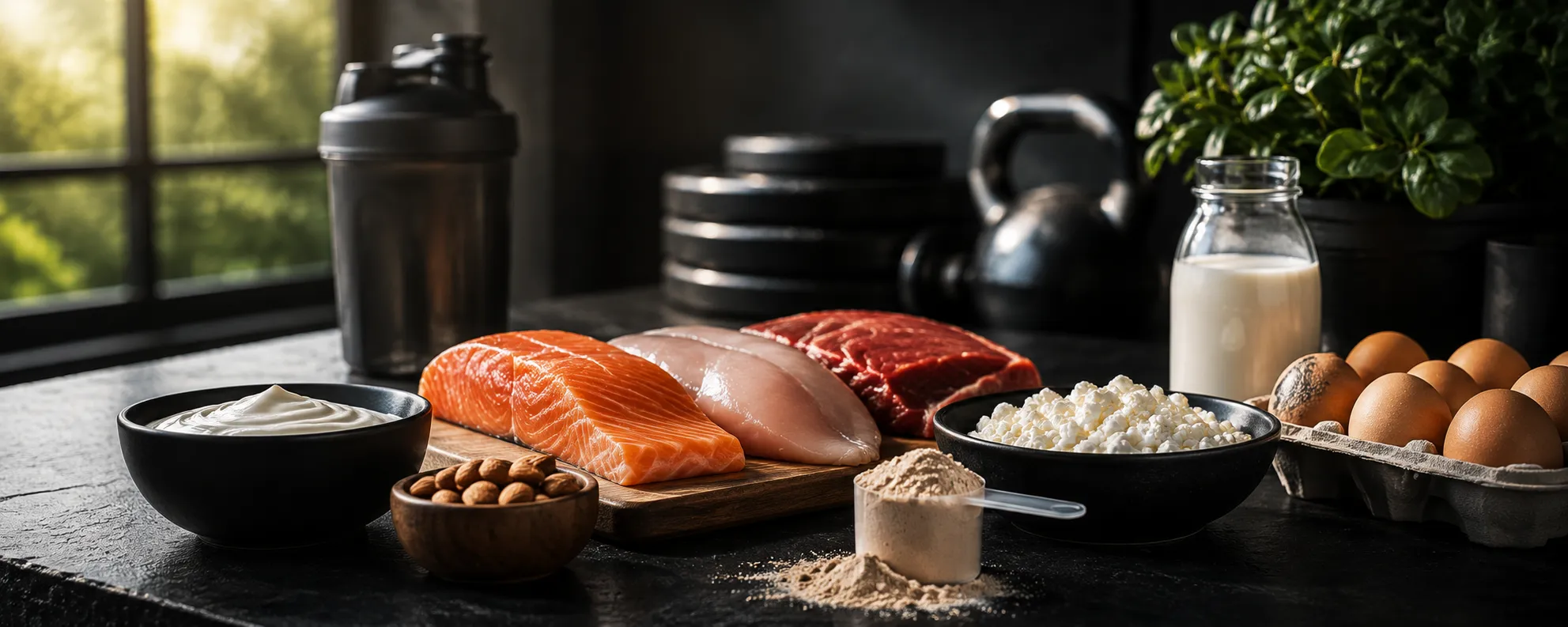
Protein is one of the macronutrients, and eliminating it from the diet can carry risks. But do you know exactly how much protein your body needs each day? The answer isn’t the same for everyone. It depends heavily on your age and level of activity. If you’re an athlete, for example, you’ll need more to prevent muscle breakdown and support optimal muscle growth. That’s why many athletes choose to add a protein supplement alongside their regular meals. In this guide, we’ll walk you through how much protein you actually need, how that number shifts depending on who you are and what you’re doing, and how to hit your target without having to consume it with every meal.
What Is Protein and Why Does It Matter?
Protein is a macronutrient made up of building blocks called amino acids. Your body uses these amino acids to build and repair muscle tissue, produce enzymes and hormones, support your immune system, and keep skin, hair, and nails healthy. Unlike fat, your body can’t store protein for later use, which is why a steady daily intake matters.
There are 20 amino acids in total, and nine of them are considered essential because your body can’t make them on its own. You have to get them from food. Protein also tends to be more filling than carbohydrates or fat, which is part of why it plays such a big role in weight management. In short, protein isn’t just for bodybuilders. It’s foundational to how your entire body functions.

How Much Protein Do You Need Per Day?
The Recommended Dietary Allowance (RDA) for protein is set at 0.8 grams of protein per kilogram of body weight. This guideline represents the minimum amount of protein your body needs to meet basic nutritional requirements and prevent deficiency.
It’s important to understand that the RDA is not necessarily the optimal intake for everyone. Instead, it is the baseline level required to avoid getting sick or experiencing symptoms of protein deficiency. Many people, especially those who are active or trying to improve body composition, may benefit from consuming more than this minimum amount.
A simple way to estimate your daily protein needs is to use your body weight in kilograms:
Body weight (kg) × 0.8 = daily protein requirement (grams)
For example, a person weighing 70 kg would need about 56 grams of protein per day at the baseline level.
Protein Needs by Age, Sex, and Activity Level
Your ideal Protein intake depends on several personal factors and is not the same for everyone. Protein needs vary significantly based on age, life stage, sex, and how active you are each day. While the standard guideline for a sedentary adult is about 0.8 grams per kilogram of body weight. Many people, especially those who are active or aging, need more to help maintain muscle mass, support bone health, and promote recovery. Below is a breakdown of how protein needs change across different groups and lifestyles.
1. Protein Needs by Age & Sex
These baseline recommendations are designed mainly to prevent protein deficiency in sedentary individuals, rather than optimize performance or body composition:
- Children (ages 1–13): about 13–34 g/day, gradually increasing as they grow.
- Teenagers (ages 14–18): about 46 g/day for females and 52 g/day for males.
- Adults (ages 19–64): about 46 g/day for females and 56 g/day for males.
- Older Adults (65+): protein needs increase to around 1.0–1.2 g/kg of body weight to help reduce muscle loss and maintain strength.
2. Protein Needs by Activity Level
Physical activity significantly increases your body’s need for protein because muscles require amino acids to repair and rebuild after exercise. A simple way to estimate needs is by multiplying your body weight in kilograms by an activity-based factor:
- Sedentary or lightly active: 0.8 g/kg of body weight
- Moderately active (exercise 3–5 days/week): 1.2–1.5 g/kg
- Highly active (strength training or endurance athletes): 1.6–2.0 g/kg
3. Protein Needs by Life Stage
Certain stages of life increase the body’s demand for protein due to hormonal changes or additional biological needs:
- Pregnancy & Breastfeeding: about 71 g/day to support fetal growth, tissue development, and milk production.
- Menopause & Post-menopause: aim for 1.0–1.2 g/kg of body weight, as the body becomes less efficient at using protein and is more prone to muscle and bone loss.
Protein for Muscle Building and Weight Loss
Protein supports both muscle building and weight loss by helping the body repair and build muscle tissue. It also improves overall body composition over time. When combined with resistance training, higher protein intake supports muscle protein synthesis. This process helps muscles recover after exercise. It also supports gradual gains in strength and size.
During weight loss, protein helps increase feelings of fullness. This can make it easier to reduce overall calorie intake. It also helps preserve lean muscle while in a calorie deficit. Maintaining muscle is important for keeping metabolism stable. Because of these effects, people aiming to build muscle or lose fat are often encouraged to consume more protein than the minimum requirement.
How and When to Take Protein
Getting enough protein is only part of the picture; how you spread it across the day matters just as much. Your body uses protein most efficiently when you eat it in moderate amounts at regular intervals. For most adults, the body can effectively use only around 20–30 grams of protein per meal for muscle building at a time; beyond that, the surplus is used for other functions or burned for energy rather than added efficiently to muscle. Because of this, spreading your intake across three or four meals and snacks works better than loading it all into a single sitting.
Eating protein-rich foods within a couple of hours after exercise supports muscle repair and recovery, while including some protein at breakfast helps curb hunger through the day. If you find it hard to reach your target from food alone, a protein shake between meals or after training is a convenient way to top up.
Signs You May Not Be Getting Enough Protein
Protein deficiency is rare in developed countries, but inadequate intake can still occur, especially in restrictive diets. Possible signs include:
- Persistent hunger and frequent cravings
- Slow recovery from workouts or lingering muscle soreness
- Loss of muscle tone or noticeable weakness
- Brittle hair and nails, or thinning hair
- Getting sick more often than usual
- Swelling in the feet and ankles in more severe cases
Best Sources of Protein
You can meet your needs from both animal and plant foods. Animal sources are “complete,” meaning they contain all nine essential amino acids. Strong options include chicken breast (about 31 g per 100 g), eggs (about 6 g each), Greek yogurt, fish, lean beef, and cottage cheese. These are protein-dense and easy to build meals around.
Plant sources are excellent too, though most are lower in one or more amino acids. Lentils, chickpeas, black beans, tofu, tempeh, edamame, quinoa, nuts, and seeds all contribute meaningfully. Eating a variety across the day easily covers all the essential amino acids, so vegetarians and vegans can absolutely thrive with a little planning.
Tips to Meet Your Daily Protein Goal
Protein powders and protein shakes can be a practical option for people with busy schedules or higher protein needs. In many cases, food alone is not enough to meet targets consistently. Athletes, active individuals, or anyone aiming to build or maintain muscle often find that food sources don’t always cover their daily targets consistently.
When whole foods fall short, particularly on hectic days, a quality protein supplement can help bridge the gap quickly and efficiently. Avitazen offers a range of protein options designed for different goals and digestion needs. For example, Iso-FUJI whey protein isolate provides over 90% protein with minimal carbohydrates, fat, and lactose, making it suitable for lean muscle support and weight management. For faster recovery after training, HydroRAZAN hydrolyzed whey is designed for quick absorption and easier digestion. Meanwhile, HiroBLEND protein blend combines multiple protein sources to deliver a steadier release of amino acids throughout the day. For those who avoid dairy or want different digestion speeds, there are also egg proteins and casein options available.

Conclusion
Protein is an essential nutrient that supports nearly every system in the body. While the basic requirement for most adults is around 0.8 g/kg of body weight, many people may benefit from a higher intake. The key is consistently including high-quality protein sources throughout the day. With a balanced diet and a bit of planning, meeting your protein needs can be simple, sustainable, and beneficial for long-term health.