

Fish oil is one of the most widely used dietary supplements worldwide—and for good reason. Rich in omega-3 fatty acids, it supports heart health, brain function, joint mobility, and overall wellness. However, simply taking this supplement isn’t enough to maximize its benefits. Knowing when and how to take fish oil can improve nutrient absorption. This guide explains when to take this supplement, how much to use, how to improve absorption, and what mistakes to avoid.
What Is Fish Oil and Why Is It Important?
Fish oil is a dietary supplement extracted from fatty fish such as salmon, mackerel, sardines, anchovies, and herring. It is one of the richest natural sources of omega-3 fatty acids, particularly EPA (Eicosapentaenoic Acid) and DHA (Docosahexaenoic Acid). Understanding the fish oil benefits can help explain why this supplement is widely used to support overall health.
Unlike some nutrients that the body can produce on its own, omega-3 fatty acids must primarily come from food or supplements. Many people do not consume enough fatty fish to meet their omega-3 needs, making these supplements a convenient option.

What Is the Best Time to Take Fish Oil?
There is no scientifically proven best time of day to take fish oil. Whether you take it in the morning, at lunch, or in the evening, the most important factor is consistency. Taking your supplement at the same time every day helps establish a routine. Also, this will ensure you receive a steady supply of omega-3 fatty acids.
While the timing itself doesn’t significantly affect its effectiveness, how you take it does matter. Research suggests that omega-3 fatty acids are absorbed more efficiently when this supplement is taken with a meal that contains dietary fat. EPA and DHA are fat-soluble, so taking them with healthy fats improves absorption and utilization.
How Much Fish Oil Should You Take?
There is no single recommended dose of fish oil that suits everyone. The ideal amount depends on your age, diet, health status, and individual needs. Focus on EPA and DHA content rather than total fish oil, as these omega-3 fatty acids provide the primary health benefits.
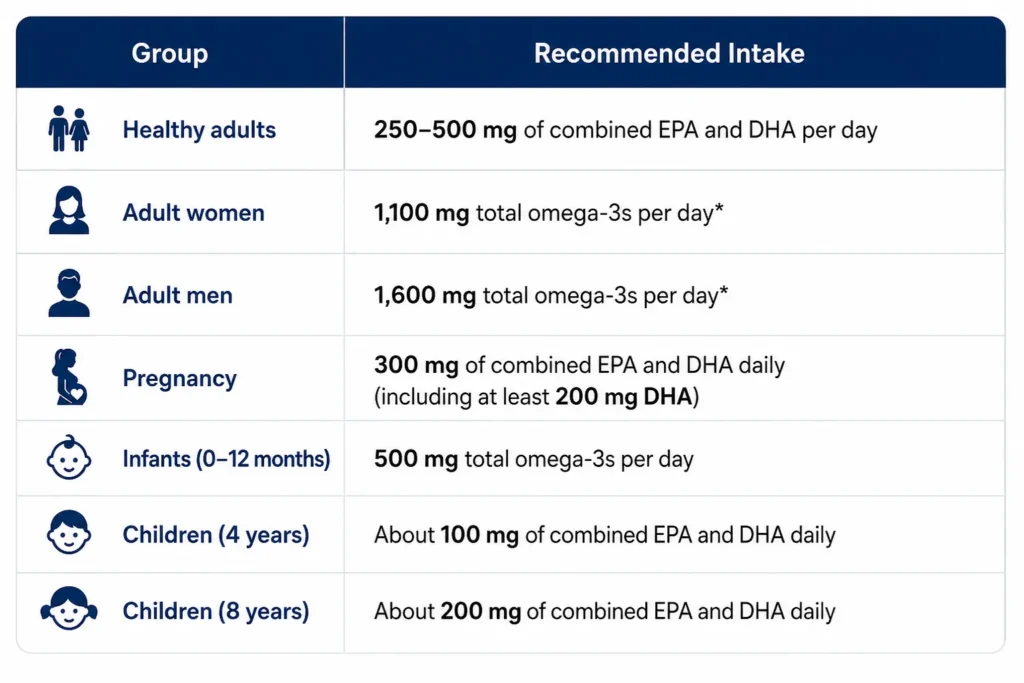
For most healthy adults, the recommended daily intake of it is 250–500 mg of combined EPA and DHA. A 1,000 mg fish oil capsule usually provides only about 300 mg of EPA and DHA. So check the label before buying. The table below outlines the recommended daily intake of it for different age groups and life stages.
How to Take Fish Oil Properly for Maximum Benefits
You can take fish oil with a meal that contains healthy fats, such as eggs, avocado, nuts, or olive oil, to maximize its benefits. If you’re taking a higher daily dose, consider splitting it between two meals to reduce fishy burps and digestive discomfort.
Select a high-quality fish oil supplement that undergoes third-party purity testing and features clear EPA/DHA labeling. Store it in a cool, dry place away from heat and sunlight, and follow the label instructions for liquids. Most importantly, take this supplement consistently every day, as regular use is essential for maintaining healthy omega-3 levels and achieving long-term health benefits.

Are There Any Side Effects?
Fish oil supplements are considered safe for most healthy adults when used within recommended amounts. However, some people may experience mild side effects, especially when taking high doses. Common side effects of taking this supplement include:
- Fishy taste or unpleasant breath: Some users notice a fishy aftertaste, burping, or bad breath after taking these capsules.
- Digestive issues: Fish oil may cause mild stomach discomfort, nausea, bloating, heartburn, or indigestion in some individuals.
- Diarrhea or loose stools: Taking large amounts of fish oil can affect digestion and may lead to softer stools or diarrhea.
- Increased bleeding tendency: High doses of omega-3 fatty acids may slightly slow blood clotting, which can increase bleeding risk, especially for people taking anticoagulant medications.
- Changes in heart rhythm: Very high doses of fish oil supplements have been linked to a small increase in the risk of atrial fibrillation (irregular heartbeat), particularly in people with existing heart conditions.
- Lower blood pressure: Fish oil may have a mild blood pressure-lowering effect, which could require monitoring for people already using blood pressure medications.
- Allergic reactions: People with fish or seafood allergies should use these supplements cautiously and consult a healthcare provider before taking them.
Conclusion
Fish oil remains one of the most effective supplements for supporting heart, brain, joint, eye, and overall health. Take this with a healthy-fat meal and follow the recommended dosage for best results. By following this usage guide, you can improve omega-3 absorption and reduce potential side effects.