

If yesterday’s workout is still controlling how well you move, lift or run today, the missing piece may be recovery rather than motivation. Intense training challenges muscle tissue, reduces glycogen stores and increases fluid losses. The right recovery supplements can make those needs easier to meet, but only when they solve a real gap in your diet or training routine.
For most active adults, protein, creatine, carbohydrates and electrolytes have the clearest practical roles. Other muscle recovery supplements, including tart cherry, omega-3 fatty acids and curcumin, may help in selected situations, but the evidence is less consistent. Sleep, total energy intake, regular meals and sensible training still do more of the work than any powder or capsule.
What Does Your Body Need to Recover After Intense Training
Recovery is not a single process. Resistance training increases the need to repair and remodel muscle proteins. Long or high-volume sessions can substantially reduce muscle glycogen, the stored carbohydrate used during hard exercise. Sweating removes water and sodium, while unfamiliar or eccentric exercise may produce delayed onset muscle soreness, commonly called DOMS.
That is why the best post-workout strategy depends on the session. A lifter who trained for 50 minutes in a cool gym may mainly need a protein-rich meal and water. An endurance athlete finishing a long session in hot weather may need carbohydrate, sodium and more deliberate fluid replacement. Someone training again later the same day has less time to restore fuel than a person with two days before the next workout.
Which Recovery Supplements Have the Strongest Evidence
A useful supplement should address a specific recovery problem. The table below separates established options from supplements that are promising but more dependent on context.
| Supplement | Best for | When it helps most | Evidence |
| Protein powder | Muscle repair and daily protein intake | When food alone does not meet protein needs | Strong |
| Creatine monohydrate | Repeated high-intensity performance and training capacity | With consistent daily use | Strong |
| Carbohydrate supplement | Restoring muscle glycogen | Long sessions, high volume or short recovery windows | Strong in specific situations |
| Electrolytes | Replacing sodium and supporting rehydration | Heavy sweating, heat or prolonged exercise | Strong in specific situations |
| Tart cherry and polyphenols | Possible reduction in exercise-related soreness | Competitions or closely spaced demanding sessions | Emerging or mixed |
| Omega-3 or curcumin | Possible support for soreness and inflammation | Selected cases, usually with ongoing use | Mixed |
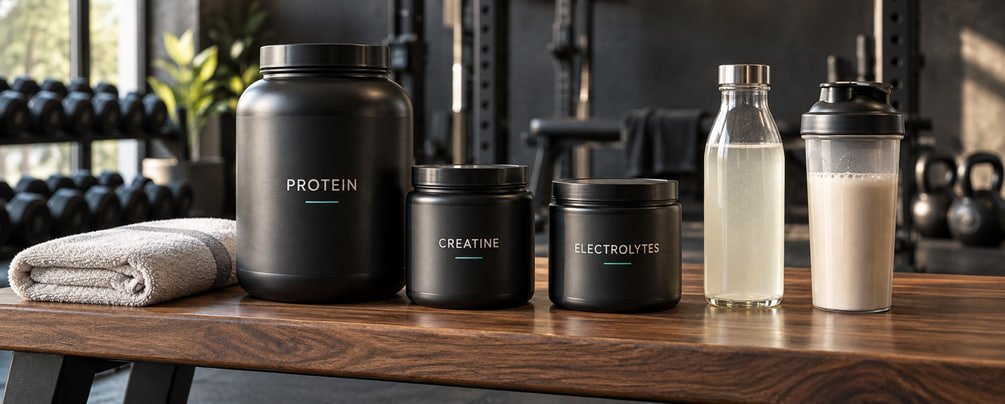
Top Muscle Recovery Supplements Explained
1 Protein Powder for Convenient Muscle Repair
Protein powder is useful because it makes an established nutrition target easier to reach. According to the International Society of Sports Nutrition position stand, most exercising adults can support training adaptations with roughly 1.4 to 2.0 grams of protein per kilogram of body weight per day. A serving that provides about 20 to 40 grams of high-quality protein is a practical option around training, although body size, diet and the rest of the day’s intake matter.
Whey is rapidly digested and naturally rich in essential amino acids. A well-formulated plant protein blend can also work, particularly when it combines complementary sources and provides an adequate total dose. Protein powder is not inherently better than eggs, dairy, fish, meat, soy or legumes. It is simply portable and predictable. Explore Avitazen’s protein powders or read the guide to protein before or after a workout for a closer look at timing.
2 Creatine Monohydrate for Training Capacity and Recovery
Creatine monohydrate increases muscle creatine stores and helps the body regenerate energy during repeated high-intensity efforts. Its clearest benefits relate to strength, power and the quality of repeated training, but a review of creatine and recovery research also describes possible benefits for glycogen restoration, muscle damage and recovery under some conditions. These effects are not identical in every study, so creatine should not be presented as an instant cure for soreness.
A daily intake of 3 to 5 grams is commonly used after muscle stores are saturated. Consistency matters more than taking it within minutes of finishing a workout. Choose a plain, clearly dosed product rather than a proprietary blend. See creatine monohydrate supplements and the comparison of creatine vs whey protein if you are deciding which one addresses your goal.
3 Carbohydrate Supplements When Glycogen Is the Limiting Factor
Carbohydrate is especially valuable after long endurance sessions, high-volume training or tournaments with a short turnaround. Sports drinks, powders and gels provide an efficient source when appetite is low or a full meal is not practical. Combining carbohydrate with protein can also make sense after a demanding session when both glycogen restoration and muscle repair are priorities.
Not every gym workout requires a recovery drink. If you completed a short session and can eat a balanced meal containing grains, potatoes, fruit or another carbohydrate source, that meal may be enough. Use carbohydrate supplements when the duration, volume or schedule creates a genuine need for rapid and convenient refuelling.

4 Electrolytes for Heavy Sweat Loss Heat and Long Sessions
Electrolyte products are most helpful when a workout is long, the environment is hot, or you lose a large amount of salty sweat. Sodium is the main electrolyte lost in sweat and helps retain the fluid you drink. Potassium, magnesium and calcium also have physiological roles, but a product does not become better simply because it contains a long list of minerals.
Water is usually sufficient for a shorter workout in comfortable conditions, particularly if you eat normal meals before and after it. For heavier losses, a drink that combines fluid and an appropriate amount of sodium may improve rehydration. Avitazen groups relevant options under recovery and hydration products and post-workout supplements.

5 Tart Cherry and Other Polyphenols for Short Recovery Windows
Tart cherry, berries and pomegranate contain polyphenols that may influence oxidative stress and exercise-related soreness. Some studies report modest improvements in soreness or recovery of function, while others find smaller or inconsistent effects. The Australian Institute of Sport Group B framework therefore treats fruit-derived polyphenols as an area of emerging evidence rather than a universal recommendation.
They may be most relevant during tournaments, multi-day events or unusually dense training blocks, when preserving performance between sessions matters. They are less compelling as a permanent replacement for fruit, vegetables and adequate recovery time.
6 Omega 3 or Curcumin as Optional Support
Omega-3 fatty acids and curcumin are often marketed for inflammation and soreness. Research suggests possible benefits in selected populations and protocols, but dose, duration, baseline diet and training status can change the result. A broader review of nutritional compounds used in post-exercise recovery shows why these products should be discussed with more caution than protein or creatine.
These supplements are not quick fixes, and higher doses may cause digestive problems or interact with medicines that affect bleeding. If an omega-3 product fits your diet and health needs, compare clearly labelled omega-3 supplements rather than choosing solely by the total amount of fish oil on the front label.
What About BCAAs Glutamine Magnesium and Vitamin D
BCAAs are heavily promoted as muscle repair supplements, but they provide only three amino acids. Muscle protein synthesis requires all essential amino acids. If your daily diet already contains enough complete protein, adding BCAAs is unlikely to outperform a suitable protein serving. The AIS Group C classification places BCAAs among products for which support is not strong enough for routine athlete use.
Glutamine has important roles in the body and may be relevant in particular clinical or high-stress settings, but evidence for improving routine muscle recovery in healthy athletes remains limited. Magnesium and vitamin D deserve a different distinction: both are essential nutrients, yet supplementation is most useful when dietary intake or measured status is low. Correcting a deficiency may improve health and performance; taking more than you need does not create an extra recovery advantage.
When Should You Take Recovery Supplements
There is no single timing rule for every product. Match timing to the reason you are using it:
• Protein: Use a practical serving with a meal or snack around training, then distribute protein across the rest of the day. Total daily intake matters more than a rigid 30-minute window.
• Creatine: Take it every day at a time you can maintain. It works by increasing muscle stores over time.
• Carbohydrate: Prioritise it soon after training when the session was long or demanding and another hard session follows within hours.
• Electrolytes: Use them during or after sessions that produce meaningful sweat losses. Adjust the amount to the weather, duration and your individual sweat rate.
• Tart cherry or polyphenols: Research protocols often use them for several days around demanding exercise, not as a one-off capsule after training.
How Can You Choose a Safe High Quality Supplement
Start with a clear purpose and a transparent dose. Products that hide amounts inside a proprietary blend are harder to evaluate. Competitive athletes should also look for independent batch testing because supplements can contain undeclared substances. The Australian Institute of Sport supplement framework recommends a risk-benefit approach rather than assuming that every legal supplement is effective or contamination-free.
Check whether several products repeat the same ingredients, especially caffeine, vitamins, minerals or herbal extracts. More ingredients do not guarantee faster recovery. Speak with a qualified healthcare professional before supplementing if you have kidney or liver disease, take prescription medicines, are pregnant, or have been advised to restrict protein, sodium or fluid. Persistent pain, severe swelling, dark urine or unusual weakness after exercise requires medical assessment rather than another recovery product.
Frequently Asked Questions
What supplements help muscles recover faster
Protein supports muscle protein repair, while creatine supports repeated high-intensity performance and may aid selected recovery outcomes. Carbohydrates and electrolytes become more important after long, high-volume or sweaty sessions. The best choice depends on what the workout depleted and what your normal diet already provides.
Is whey protein or creatine better for recovery
They solve different problems. Whey helps you reach an adequate protein intake and supplies essential amino acids for muscle repair. Creatine increases muscle creatine stores and supports high-intensity training capacity. Many athletes use both, but neither is mandatory if the relevant need is already met.
Do I need BCAAs if I already use protein powder
Usually not. A complete protein powder already contains BCAAs plus the other essential amino acids needed for muscle protein synthesis. Standalone BCAAs may add little when total protein intake is adequate.
Are electrolytes necessary after every workout
No. Water and normal meals are often enough after a short session in a cool environment. Electrolytes are more useful after heavy sweating, prolonged exercise, hot-weather training or when rapid rehydration is necessary.
Can recovery supplements replace sleep and post workout meals
No supplement can compensate for consistently poor sleep, inadequate energy intake or a badly planned training schedule. Supplements work best as convenient tools within a recovery plan that already includes food, fluid, rest and progressive training.
Build Your Recovery Stack Around the Gap Not the Hype
Choose a supplement only after identifying the recovery problem. If daily protein intake is low, protein powder is the most direct solution. If repeated strength or sprint performance is a priority, creatine monohydrate has a strong evidence base. Long sessions and short turnarounds make carbohydrate more valuable, while heavy sweat losses create a clearer reason to use electrolytes. Tart cherry, omega-3 and curcumin can be considered for specific situations, but they should not be the foundation of the plan.
A smaller, well-chosen recovery stack is usually easier to evaluate and maintain than a shelf full of overlapping products. Start with the basics, monitor how your training and recovery respond, and change one variable at a time.