
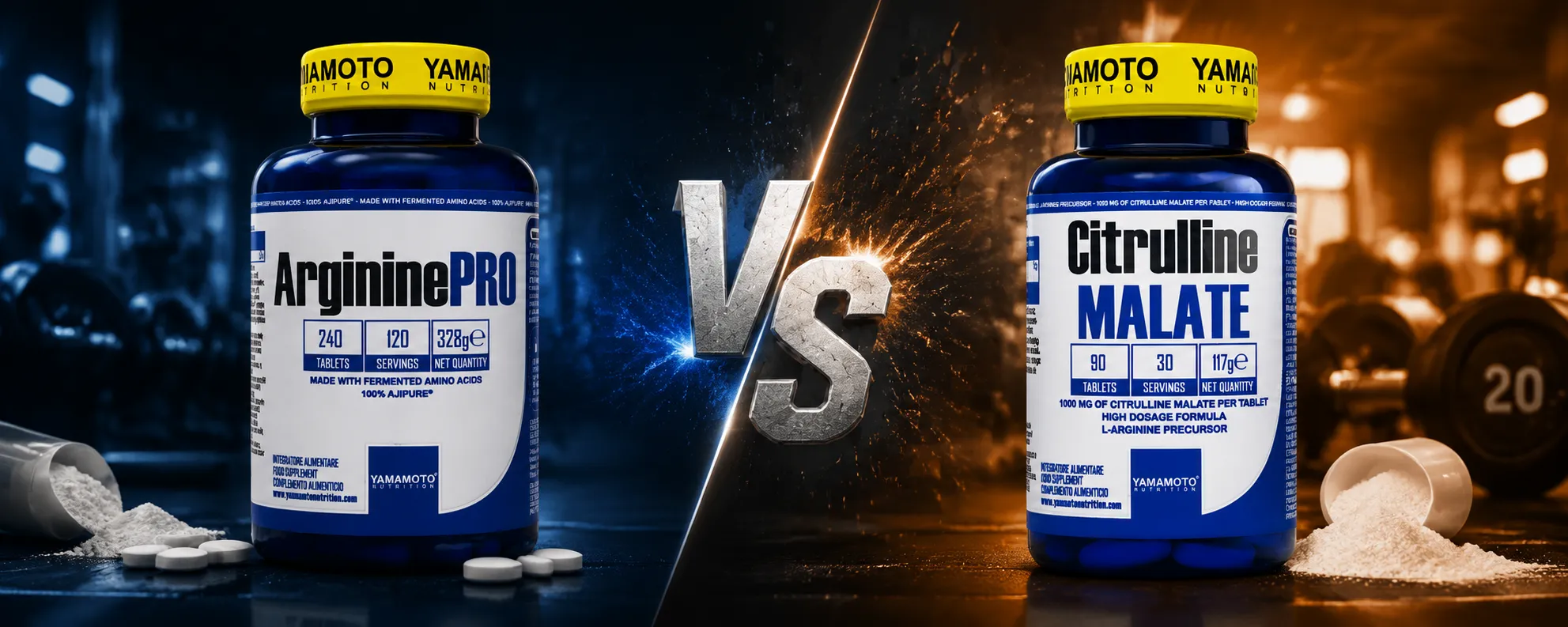
The muscle pump is a natural response that occurs during intense exercise. It happens when blood flow increases and more oxygen and nutrients reach the working muscles. This process helps support muscle performance, endurance, and recovery. A key player in this process is nitric oxide (NO). NO helps widen blood vessels and improve circulation during training.
Arginine and Citrulline are two popular amino acids that support nitric oxide production. Both may improve blood flow and muscle pumps, but they work differently in the body. So, Arginine vs Citrulline, which one is better for muscle pumps and exercise performance? This article compares their benefits, mechanisms, and differences to help you make the right choice.
What Is Arginine?
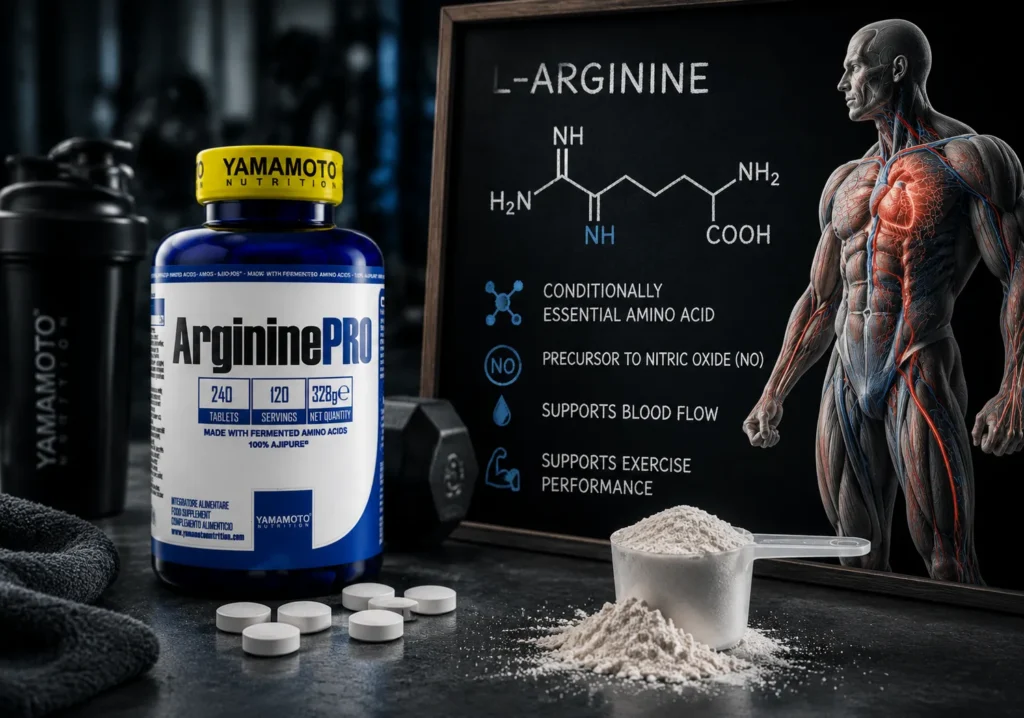
Arginine is a semi-essential amino acid that helps produce nitric oxide (NO), a molecule that improves blood flow by relaxing blood vessels. Some of the key arginine benefits include supporting circulation, oxygen delivery, and exercise performance. The body can produce Arginine naturally, and it is also found in foods such as meat, fish, dairy products, nuts, and legumes.
Because of its role in circulation and exercise performance, Arginine is commonly used in sports supplements. However, much of the Arginine taken orally may be broken down before entering the bloodstream, which can limit its effectiveness compared with alternatives like Citrulline.
What Is Citrulline?
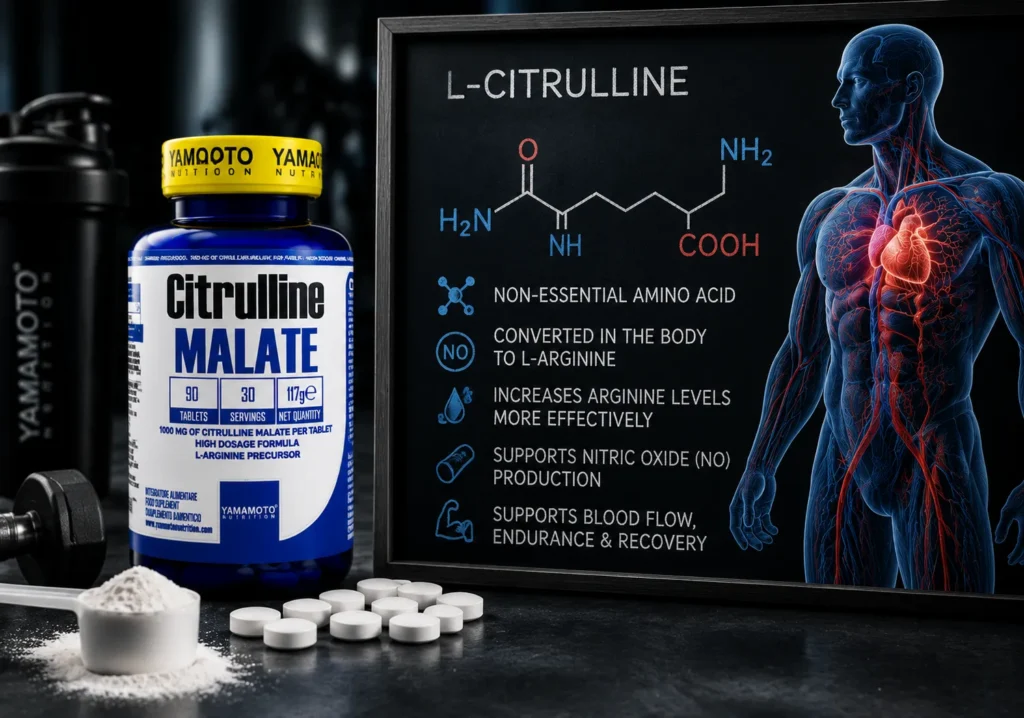
Citrulline is an amino acid that supports the body’s nitric oxide pathway. Unlike Arginine, it does not directly produce nitric oxide. Instead, the body converts Citrulline into Arginine, helping maintain higher Arginine levels in the blood. Citrulline is naturally found in foods like watermelon. As a supplement, it is commonly available as L-Citrulline and Citrulline Malate, which are often used in sports nutrition products.
One of Citrulline’s main benefits is that it can raise blood Arginine levels more effectively than direct Arginine supplementation. This is why many athletes use Citrulline to support better muscle pumps, endurance, and exercise performance.
How Arginine and Citrulline Work in the Body
Both Arginine and Citrulline support the same nitric oxide pathway, but they work in different ways. Arginine is directly converted into nitric oxide by the enzyme nitric oxide synthase. This increases nitric oxide levels, which helps relax and widen blood vessels. As a result, blood flow and oxygen delivery to muscles may improve.
Citrulline takes a different approach. After consumption, it is converted into Arginine in the kidneys, increasing the body’s available Arginine supply. This process helps maintain higher Arginine levels in the bloodstream and may support longer-lasting nitric oxide production. Because Citrulline raises blood Arginine levels more effectively, many researchers and athletes consider it a more reliable option for boosting nitric oxide availability.
Arginine vs Citrulline: Key Differences
Although Arginine and Citrulline both support nitric oxide production, they differ in how they work and how the body uses them.
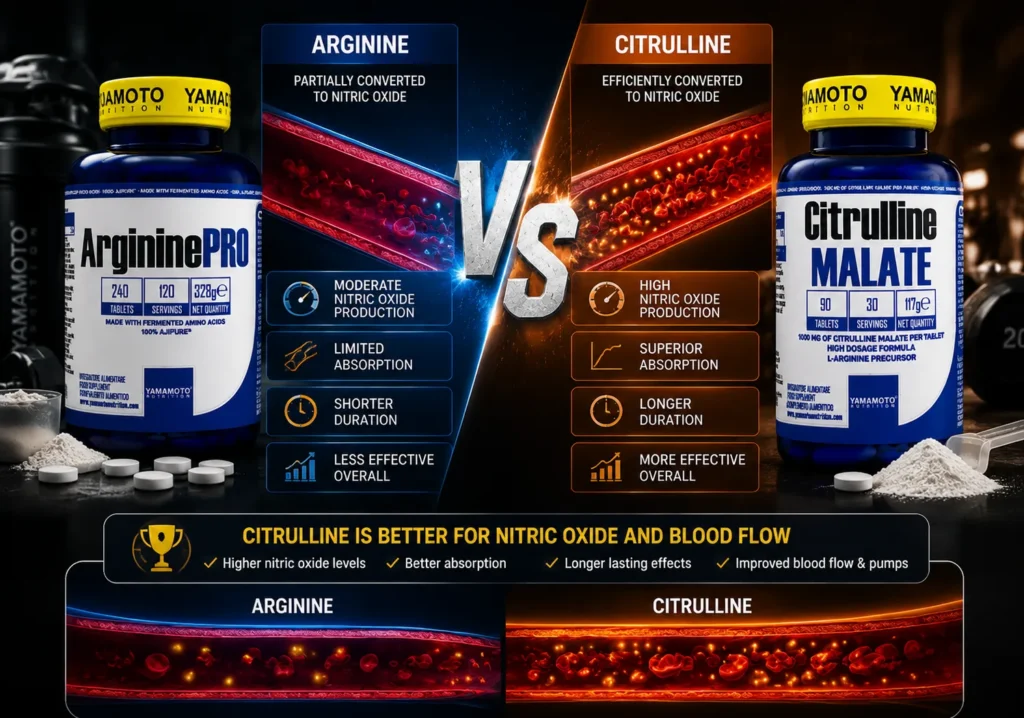
- Absorption and effectiveness: Arginine directly contributes to nitric oxide production, but a significant amount may be broken down before it reaches the bloodstream. Citrulline is absorbed more efficiently and helps increase Arginine levels in the body more consistently.
- Main uses: Arginine is commonly used to support circulation and overall cardiovascular function. Understanding how to use Arginine can help maximize its potential benefits. Citrulline is especially popular among athletes because it may improve blood flow, muscle pumps, and exercise performance.
- Duration of effects: Citrulline typically provides a more sustained increase in Arginine levels, while Arginine’s effects may be shorter-lived.
- Supplement popularity: Both are widely available, but Citrulline has become increasingly favored in pre-workout formulas due to its strong connection with improved blood flow and exercise benefits.
Which Is Better for Nitric Oxide and Blood Flow? Arginine or Citrulline?
Both Citrulline and Arginine can support nitric oxide production, but the body uses them differently. Arginine is directly involved in nitric oxide formation, while Citrulline works by increasing the body’s available Arginine supply.
Research from human studies shows that Citrulline supplementation can raise blood Arginine levels more consistently than Arginine itself. This is mainly because Citrulline avoids significant breakdown during first-pass metabolism in the liver, allowing more Arginine to become available in the bloodstream. Citrulline is often considered a more reliable choice for improving nitric oxide availability, supporting blood flow, and enhancing oxygen delivery to muscles.
Which Is Better for Exercise Performance and Pumps?
For athletes and fitness enthusiasts looking to improve muscle pumps and workout performance, Citrulline is often the preferred choice. By supporting nitric oxide production, Citrulline may help increase blood flow to active muscles. This can lead to better pumps, improved endurance, and less fatigue during high-intensity training.
Citrulline Malate is especially popular in sports supplements because it combines Citrulline with malic acid, a compound involved in energy production. This combination may help support longer and more productive workouts. While Arginine can also provide exercise-related benefits, Citrulline is generally considered more consistent for enhancing blood flow and supporting training performance.
Dosage Recommendations for Each of Citrulline vs Arginine
The ideal dose of Citrulline or Arginine depends on your goal, supplement form, and how your body responds. Both are commonly used to support nitric oxide production, blood flow, and exercise performance, but they are typically taken in different amounts.
Citrulline is widely used in sports nutrition because it can effectively increase blood Arginine levels. Research on exercise performance typically uses doses ranging from 3 to 8 grams per day. Many athletes take Citrulline before training to support better muscle pumps, endurance, and blood flow during workouts.
Recommended Citrulline dose:
- L-Citrulline: 3–6 grams, taken about 30–60 minutes before exercise.
- Citrulline Malate: 6–8 grams before training, depending on the ratio of Citrulline to malic acid.
Arginine doses can vary based on the intended use. Studies have examined amounts ranging from 3 to 6 grams per day, with some using higher doses. However, larger amounts may cause digestive discomfort in some people.
Recommended Arginine dose:
- Arginine: 3–6 grams per day, either before exercise or divided into smaller doses.
Can You Take Arginine and Citrulline Together?
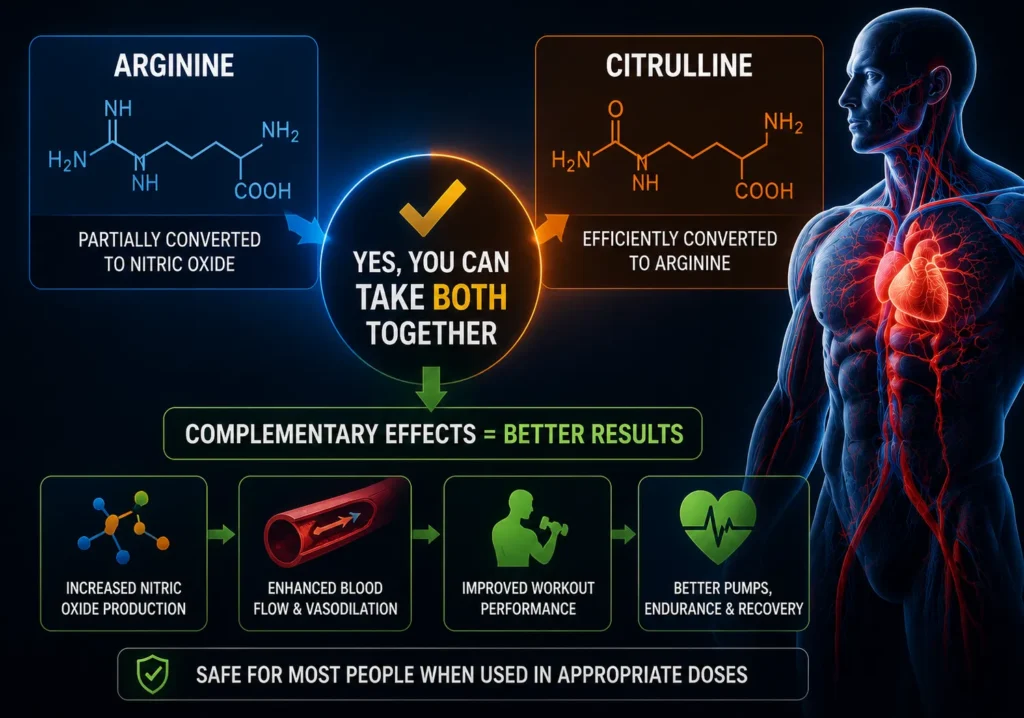
Yes, Arginine and Citrulline can be taken together. Both supplements play an important role in the nitric oxide pathway, which supports better blood flow, muscle pumps, and exercise performance. Since they work through slightly different mechanisms, combining them may provide additional support for nitric oxide production.
Many pre-workout supplements include both Citrulline and Arginine to maximize their potential benefits. Citrulline helps increase blood Arginine levels, while Arginine serves as a direct source for nitric oxide production. This combination may help improve circulation and oxygen delivery to working muscles during exercise.
However, taking both supplements is not always required. For most healthy individuals focused on muscle growth, workout performance, and better pumps, Citrulline alone may be enough because it can increase Arginine availability more effectively and provide more consistent nitric oxide support.
Potential Side Effects and Safety Considerations
Arginine and Citrulline are generally safe for most healthy adults when taken at recommended doses. However, like any supplement, they may cause side effects in some individuals. Arginine may cause mild digestive issues, including stomach discomfort, bloating, or diarrhea. Because it can affect blood vessel dilation, it may also influence blood pressure in some people. Citrulline is generally well-tolerated, but higher doses may occasionally cause mild stomach-related symptoms, such as discomfort or changes in digestion.
People with heart conditions, kidney problems, low blood pressure, or those taking blood pressure medications should speak with a healthcare professional before using either supplement. Since Arginine and Citrulline can affect nitric oxide production and circulation, professional guidance can help ensure safe and appropriate use.
Conclusion: Which One Should You Choose?
When comparing arginine and citrulline, both supplements can support nitric oxide production, blood flow, and exercise performance. However, Citrulline often has the advantage. Because it increases blood Arginine levels more effectively and provides more consistent benefits for exercise performance and muscle pumps.
If your primary goal is to improve training sessions, enhance endurance, and boost muscle pumps, Citrulline is typically the preferred choice. Arginine can still be beneficial for certain health goals or when combined with other ingredients that support its effectiveness.
The right choice ultimately depends on your personal goals, fitness routine, and how your body responds. Understanding the differences between these two amino acids can help you select the supplement that best fits your performance and wellness needs.