

Osteocol Fortibone® is a collagen powder made by Yamamoto Research. Its key ingredient, FORTIBONE®, was studied in postmenopausal women with low bone mineral density. After a year, women who took the peptides had better bone density results at the lower spine and femoral neck than those who received a placebo. The finding applies to the ingredient and the population studied. The trial did not test the finished Osteocol sachet or establish that it prevents fractures.
Two numbers are useful when reading about the product. A sachet supplies 10 grams of FORTIBONE®, while the main trial used 5 grams per day. That difference matters when you compare the box with the research. The study did not compare those two amounts, so it cannot tell us whether the larger serving produces a larger change in bone density.
What Is in an Osteocol Fortibone Sachet?
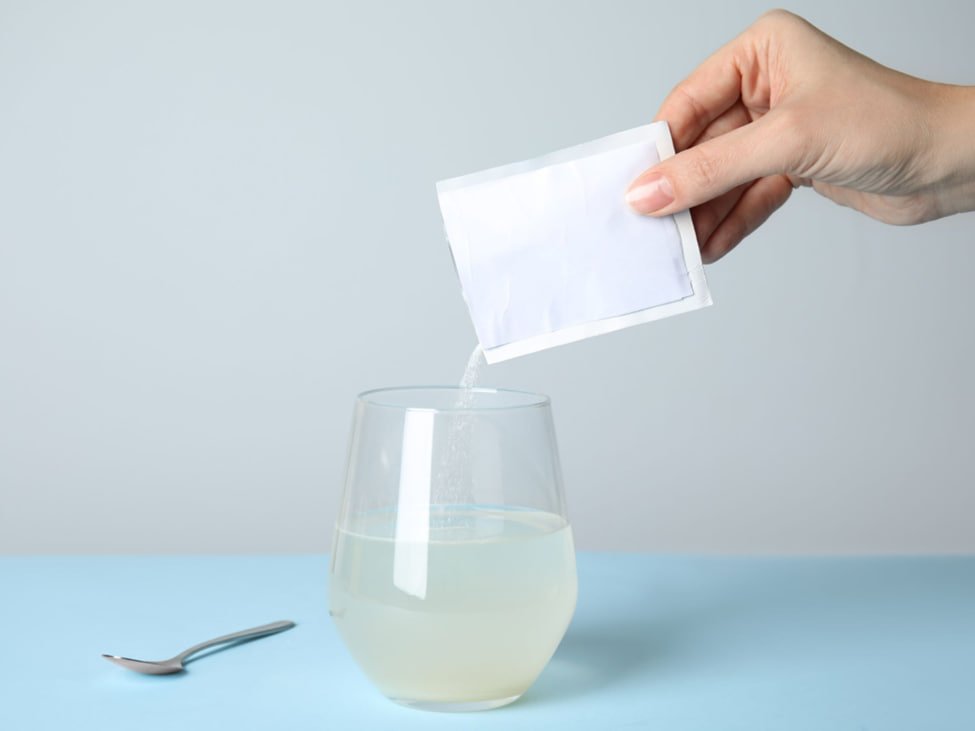
The peach flavoured powder comes in a box of 30 sachets. Each sachet weighs 11 grams in total, of which 10 grams are hydrolyzed collagen. The remaining ingredients are citric acid, natural flavouring, silicon dioxide and sucralose. Yamamoto’s directions specify one sachet mixed with 200 ml of water once daily. The Osteocol Fortibone product page lists the package and serving details.
FORTIBONE® identifies the specific preparation developed by GELITA. Hydrolysis breaks the original collagen protein into smaller fragments called peptides. Other products may also list hydrolyzed collagen or type I collagen, but those descriptions alone do not identify the same peptide preparation. The ingredient name is the useful detail when checking whether a product uses the collagen described in a study.
Why Study Collagen for Bone Health?
Bone contains a mineral phase and a protein matrix. The mineral phase contributes to stiffness, while the matrix, made largely of type I collagen, helps bone resist damage under load. Both are present in living tissue that is constantly being remodelled. During remodelling, cells remove small amounts of old bone and other cells form new tissue in its place.
The collagen found in bone and the collagen in a drink are different parts of that story. Digestion breaks dietary proteins down further. The presence of type I collagen in bone gives researchers a reason to study particular peptides, but it cannot predict how a supplement will affect a person’s scan. For that, the most useful evidence comes from comparisons in people.
What Did the FORTIBONE Research Find?
Bone Density After 12 Months
In a 2018 randomized trial in Nutrients, König and colleagues enrolled 131 postmenopausal women with reduced bone mineral density. Participants received either 5 grams of the specific collagen peptides daily or a placebo. A total of 102 women completed the study. The researchers measured the lumbar spine and the femoral neck, a region at the top of the thigh bone, using dual energy X-ray absorptiometry (DXA).
The collagen group improved relative to placebo at both sites. The figures below are average changes in T-score, the standardised score reported on a DXA scan. They are score units, not percentage changes in bone density.
| DXA site | Peptide group | Placebo group |
| Lumbar spine | +0.10 | −0.03 |
| Femoral neck | +0.09 | −0.01 |
Both groups were encouraged to take calcium and vitamin D, but use of those supplements was not controlled. GELITA partly funded the trial. These details give context to a favourable result from one controlled study. They also make a case for independent studies using clearly recorded background nutrition.
What the Longer Follow-Up Can Tell Us
In a 2021 follow-up, Zdzieblik and colleagues offered the peptides to women who had been in the earlier study. Thirty-one entered the follow-up and 23 completed it. The researchers reported increases in bone density at some measured sites over the observation period. Everyone received collagen during follow-up, so there was no concurrent placebo group. The study describes what happened in that small group over time; it cannot establish how much of the change came from collagen.
A 2026 scoping review in the Clinical Journal of Sport Medicine found favourable bone density or bone marker results in some studies and neutral findings in others. The studies differed in their participants, products and doses. Taken together, the evidence gives the clearest reason for interest to postmenopausal women with low bone density. It offers much less guidance about effects in younger adults, men or people whose bone density is already normal.
How Does a DXA Finding Relate to Fracture Risk?
Bone mineral density helps clinicians assess fracture risk, but a scan captures only one part of that assessment. Prior fractures, age, medicines and the likelihood of falling can also matter. A study designed to detect a change on a scan does not automatically have enough participants or events to detect a change in fracture rates.
When comparing collagen products, check whether a claim refers to a DXA result or to actual fractures. A small change in a group’s average T-score does not tell you how much anyone’s fracture risk changed. If you have had a fracture after a minor fall or have been diagnosed with osteoporosis, discuss your overall fracture risk and treatment options with the clinician managing your bone health. Keep any prescribed treatment in place unless that clinician changes it.
Where Osteocol Fits Alongside Calcium, Vitamin D and Exercise
The Osteocol ingredient list includes no added calcium or vitamin D. Calcium supplies mineral for bone, and vitamin D helps the gut absorb calcium. If your meals are short on those nutrients, address that gap directly. Yogurt, milk and calcium fortified alternatives can supply calcium; oily fish and fortified products are among the food sources of vitamin D you can use when planning meals. Check fortified products individually because their nutrient contents differ.

The UK National Osteoporosis Guideline Group also recommends regular weight bearing and muscle strengthening activity tailored to the person’s ability. For those at risk of falls, balance work can be part of the plan. Those measures address aspects of bone health and fracture risk that a collagen powder does not cover. If you are considering Osteocol, its place is as an optional addition to a plan that already takes diet, activity and any clinical needs into account.
Frequently Asked Questions
Does Osteocol Fortibone Contain Calcium or Vitamin D?
Neither is listed as an added ingredient in the peach formula. The declared collagen ingredient is FORTIBONE® hydrolyzed collagen. If you need to supplement calcium or vitamin D, make that decision separately based on your intake and any advice you have received.
Is One Box Enough to Judge the Effect on Bone Density?
One box provides 30 labelled daily servings. The controlled trial assessed bone density after 12 months, so the box length is not a timeline for measurable improvement. If you already receive DXA scans, follow the monitoring schedule agreed with your clinician.
Can I Expect the Same Result From Any Collagen Powder?
The trial tested a specific preparation. A generic collagen powder can have a different peptide profile, and a product labelled “type I collagen” is not necessarily the same ingredient. Check the named peptide and amount per serving before applying any study to a product.