

A balanced diet is the best foundation for good health, but consistently meeting every nutritional requirement isn’t always easy. Busy schedules, changing eating habits, and food restrictions can all make it challenging to get the right amount of essential vitamins and minerals every day. For this reason, many people choose to incorporate a multivitamin in their daily wellness routine.
A multivitamin is designed to complement your diet by helping cover potential nutritional gaps. While supplements are not necessary for everyone, they can offer additional support when your body needs it most. The key is selecting a product that matches your individual lifestyle, age, and health goals. In this guide, you’ll learn how to choose a multivitamin and what factors to consider before making your decision.
What Is a Multivitamin?
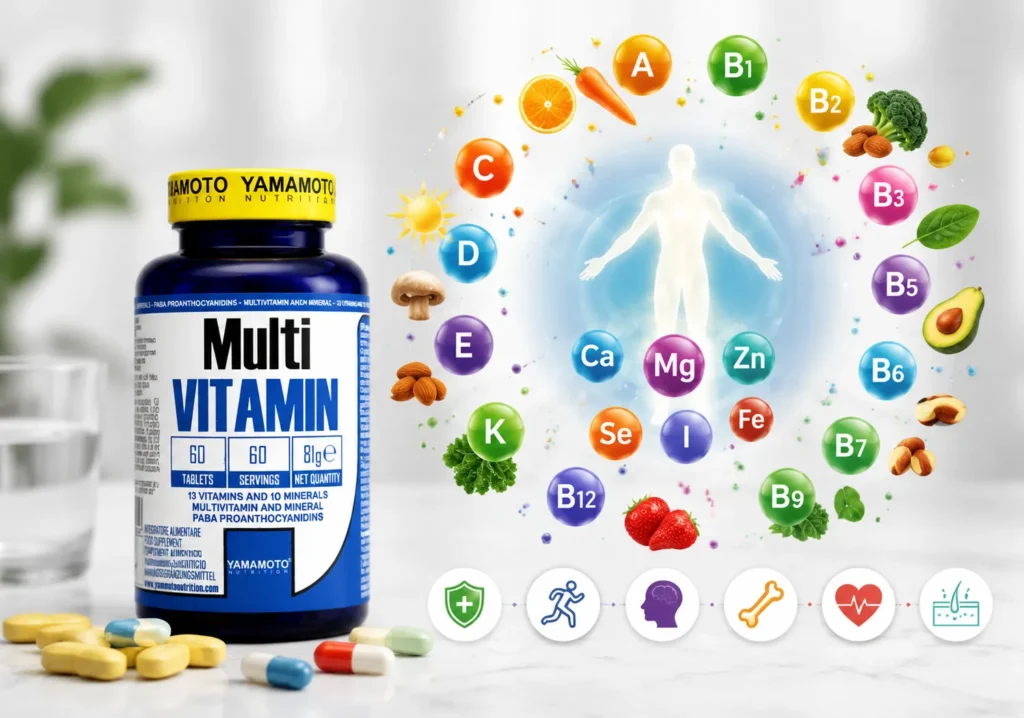
A multivitamin is a dietary supplement that contains a combination of essential vitamins and minerals. Some formulas also include additional nutrients such as antioxidants, herbal extracts, probiotics, or omega-3 fatty acids to provide targeted health benefits.
Multivitamins are intended to complement a healthy diet. Their primary purpose is to help fill nutritional gaps and support normal bodily functions, including energy production, immune function, bone health, and metabolism. Since every person’s nutritional needs are different, multivitamins come in a variety of formulations tailored for different ages, genders, and health concerns.
Do You Really Need a Multivitamin?
Not everyone requires a multivitamin. If you eat a well-balanced diet rich in fruits, vegetables, whole grains, lean proteins, and healthy fats, you may already be getting most of the nutrients your body needs. However, many people can benefit from supplementation, including:
- Individuals with restrictive diets, such as vegetarian or vegan eating plans
- Adults over 50 with changing nutritional needs
- Pregnant or breastfeeding women
- People with food allergies or digestive disorders that affect nutrient absorption
- Individuals with demanding lifestyles or poor eating habits
- Those recovering from illness or managing chronic health conditions
How to Choose a Multivitamin for Your Needs
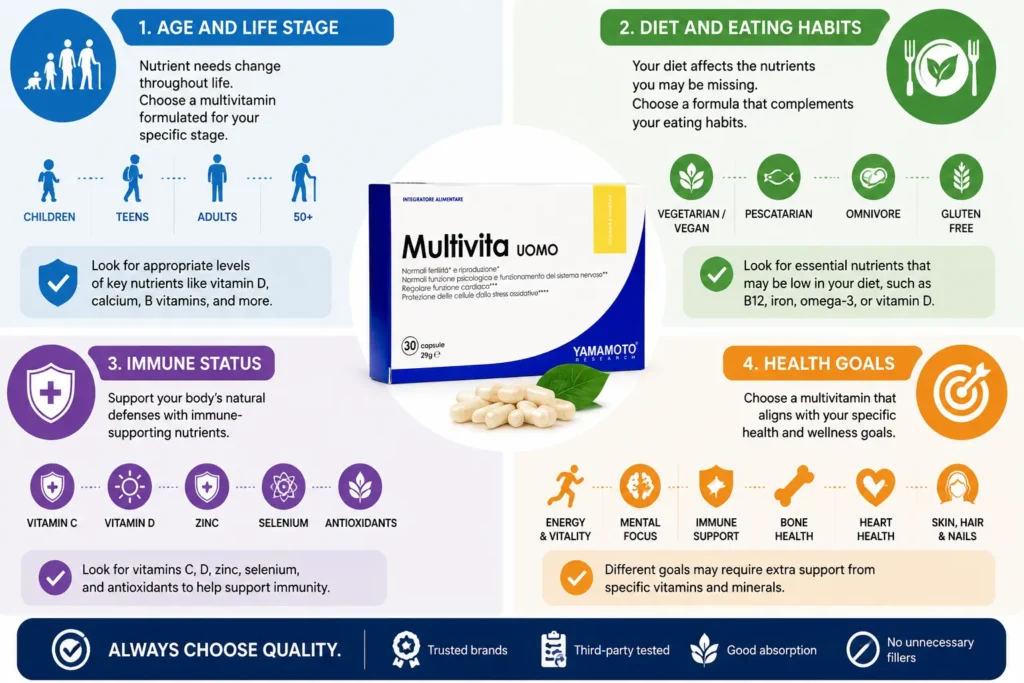
Multivitamins vary in their ingredients and nutrient levels, so there’s no one-size-fits-all option. To choose a multivitamin that suits your needs, consider factors such as your age, diet, immune health, lifestyle, and personal wellness goals.
Age and Life Stage
Nutritional requirements change throughout every stage of life. For example, adults over 50 often require higher levels of nutrients such as vitamin D, calcium, and vitamin B12 to help maintain healthy bones, muscles, and normal nerve function. Choosing a multivitamin formulated for your age and life stage can help ensure you’re getting the nutrients your body needs to support long-term health and well-being.
Diet and Eating Habits
Your diet is one of the most important factors to consider when choosing a multivitamin. Even if you try to eat a balanced diet, limiting or avoiding certain food groups can make it more difficult to get all the essential nutrients your body needs. For example, vegetarians and vegans may need additional vitamin B12, since it is naturally found mainly in animal-based foods. Similarly, people who consume little dairy or seafood may benefit from nutrients such as calcium, vitamin D, or omega-3 fatty acids. Evaluating your eating habits and identifying any potential nutritional gaps can help you choose a multivitamin that complements your diet and supports your overall health.
Immune Status
Your immune health is another important consideration when choosing a multivitamin. If you’re looking to support your body’s natural defenses, look for a formula that contains immune-supporting nutrients such as zinc, vitamin C, and vitamin D. These vitamins and minerals play important roles in normal immune function and can help fill nutritional gaps that may affect your overall wellness. Choosing a multivitamin with ingredients that align with your immune health needs can provide valuable daily nutritional support.
Health Goals
Your personal health goals can help determine which multivitamin is best for you. If you’re looking to support energy levels, a formula containing iron and B vitamins may be beneficial, especially if your diet is low in these nutrients. During the autumn and winter months, when sunlight exposure is limited, choosing a multivitamin with vitamin D can help support overall health. You may also have goals such as supporting healthy aging, bone health, or heart health.
What to Look for When Reading a Multivitamin Label
Understanding supplement labels can help you make an informed decision. Here are several things to check before purchasing:
- Daily Value (DV): Review how much of each nutrient is provided compared to the recommended daily intake. Extremely high doses aren’t always necessary and may not provide additional benefits.
- Ingredient List: Look for essential vitamins and minerals without excessive fillers, artificial colors, or unnecessary additives.
- Quality Testing: Choose products manufactured according to recognized quality standards and, when possible, those independently tested for purity and potency.
- Serving Size: Some products require multiple tablets per day, while others only require one. Choose a serving schedule that’s easy to maintain.
- Expiration Date: Always check that the product is within its shelf life to ensure nutrient potency.
- Reading labels carefully helps you compare products and avoid paying for ingredients you don’t need.
Multivitamins for Specific Needs
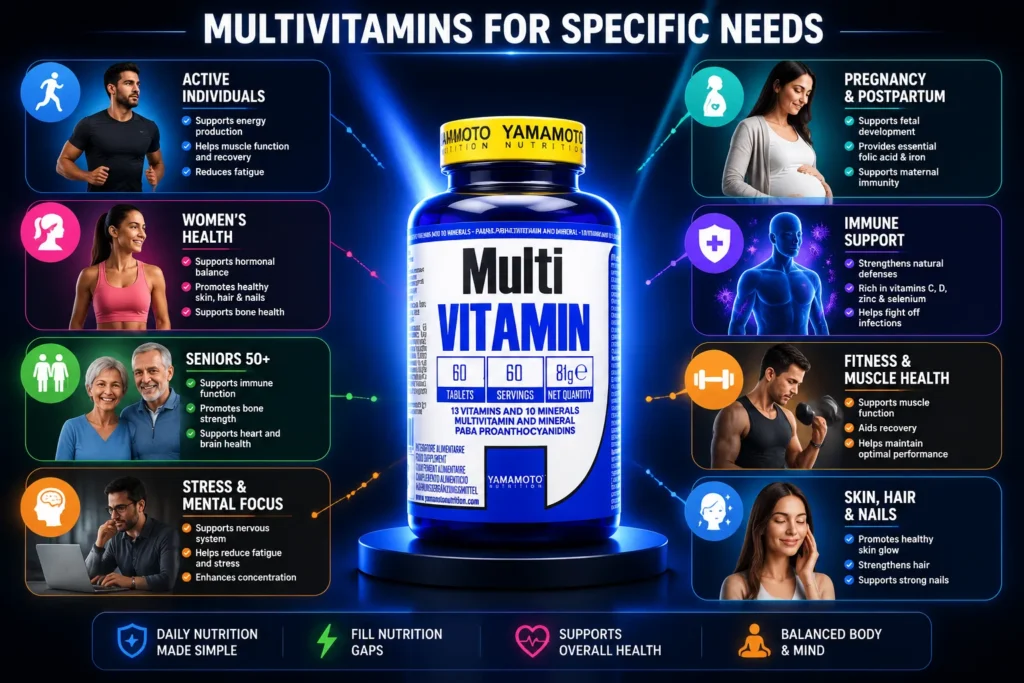
Not everyone has the same nutritional needs. That’s why many multivitamins are formulated for specific ages, lifestyles, and health goals. For example, women’s multivitamins often contain extra iron and folic acid to support their nutritional requirements. Men’s formulas may include nutrients that promote heart and prostate health. Multivitamins for adults over 50 typically provide more vitamin D, calcium, and vitamin B12 to support healthy bones, muscles, and cognitive function. Prenatal multivitamins are specially designed with nutrients like folic acid, iron, and iodine to support a healthy pregnancy.
Conclusion
Choosing the right multivitamin starts with understanding your individual nutritional needs. Factors such as your age, diet, lifestyle, immune health, and personal wellness goals all play a role in determining which formula is best for you. Since no two multivitamins are exactly alike, taking the time to compare ingredients and nutrient levels can help you make an informed choice.